Witness the Great Migration – one of nature’s most spectacular events, with our expertly curated luxury safari packages. Speak with our safari specialists today to begin your African adventure.
Big 5 | East African safari circuit |
walking safaris
The Great Migration Tour
Experience the Great Migration in Unmatched Luxury
Depending on when you embark on your Great Migration Safari, you’ll find yourself in either the vast plains of the Serengeti or the legendary Masai Mara, each offering a front-row seat to one of the world’s most extraordinary wildlife events.
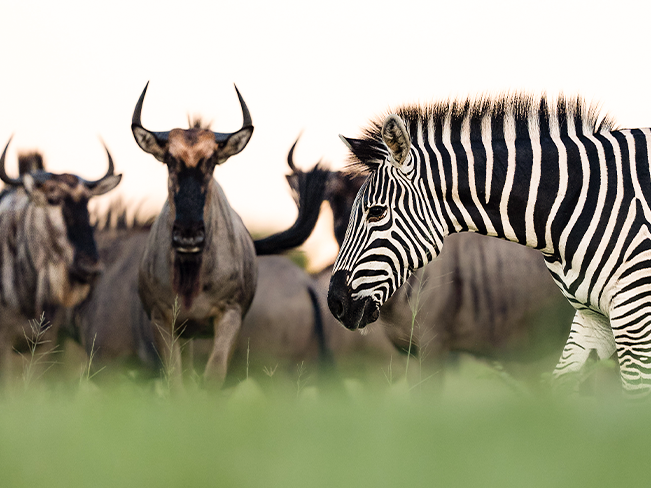
Imagine dawn breaking over the savanna as herds of wildebeest and zebra move across golden grasslands. Midday brings a private picnic under an acacia tree, followed by an evening around the campfire beneath an endless African sky. Every moment feels cinematic, raw, beautiful, and deeply alive.
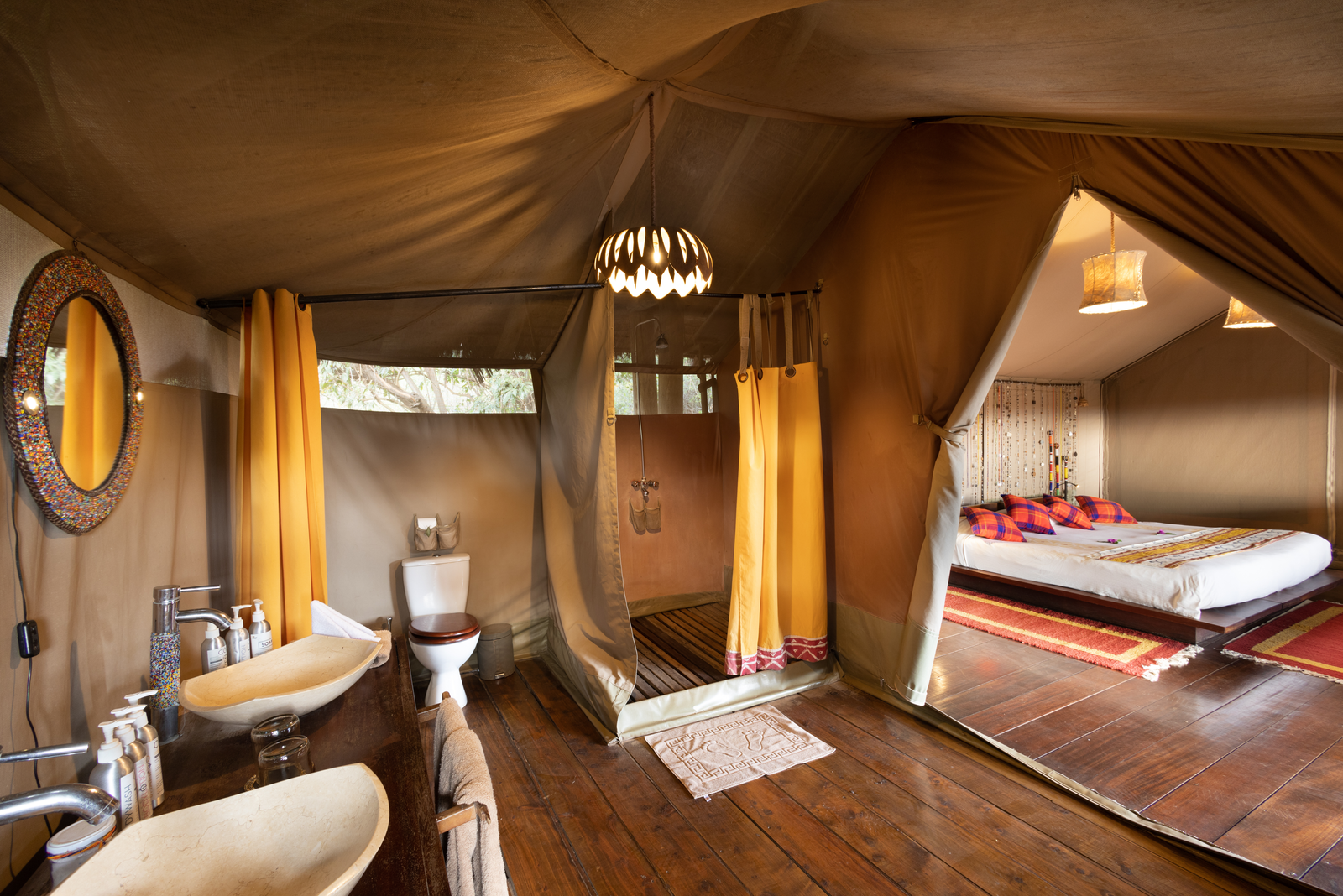
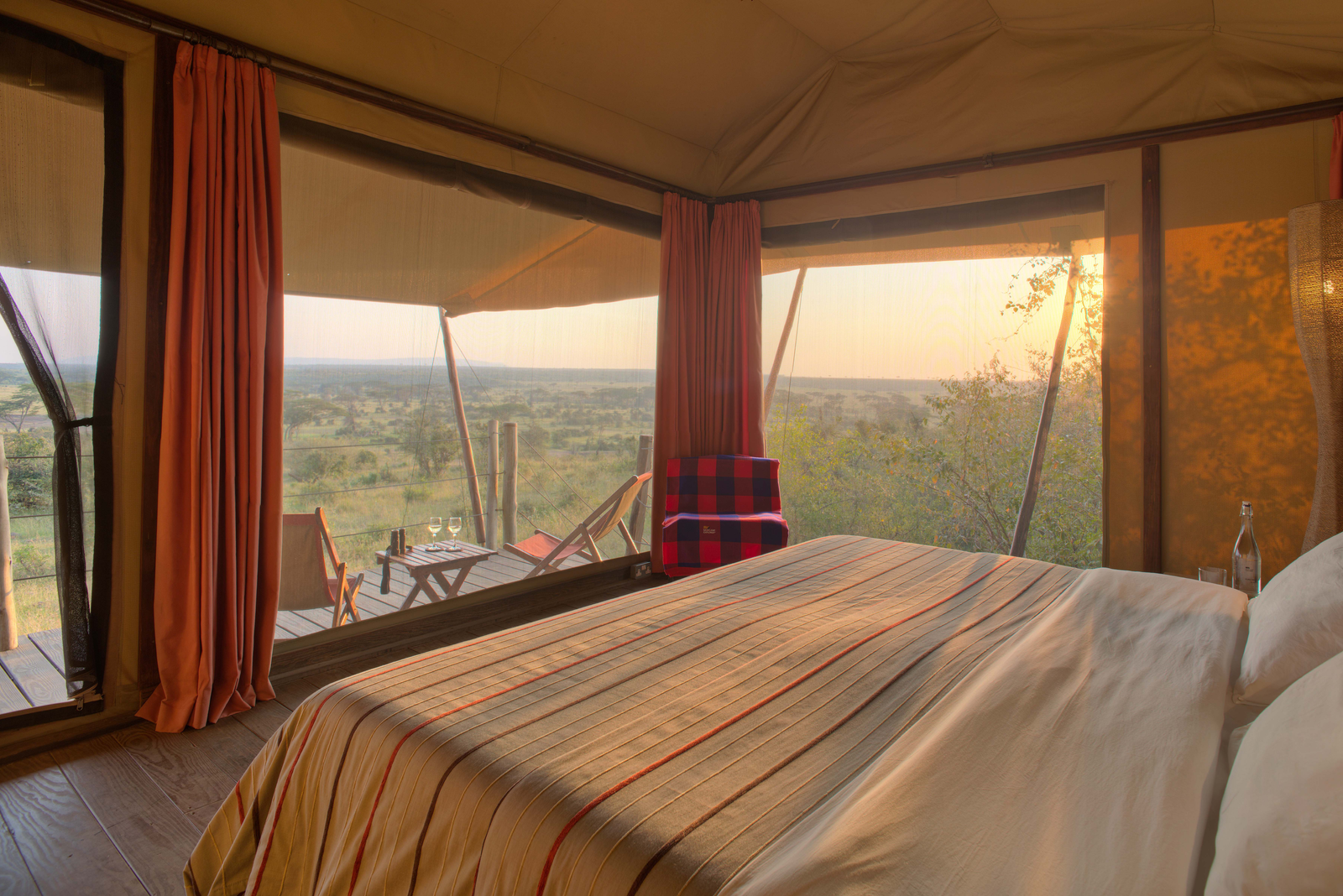
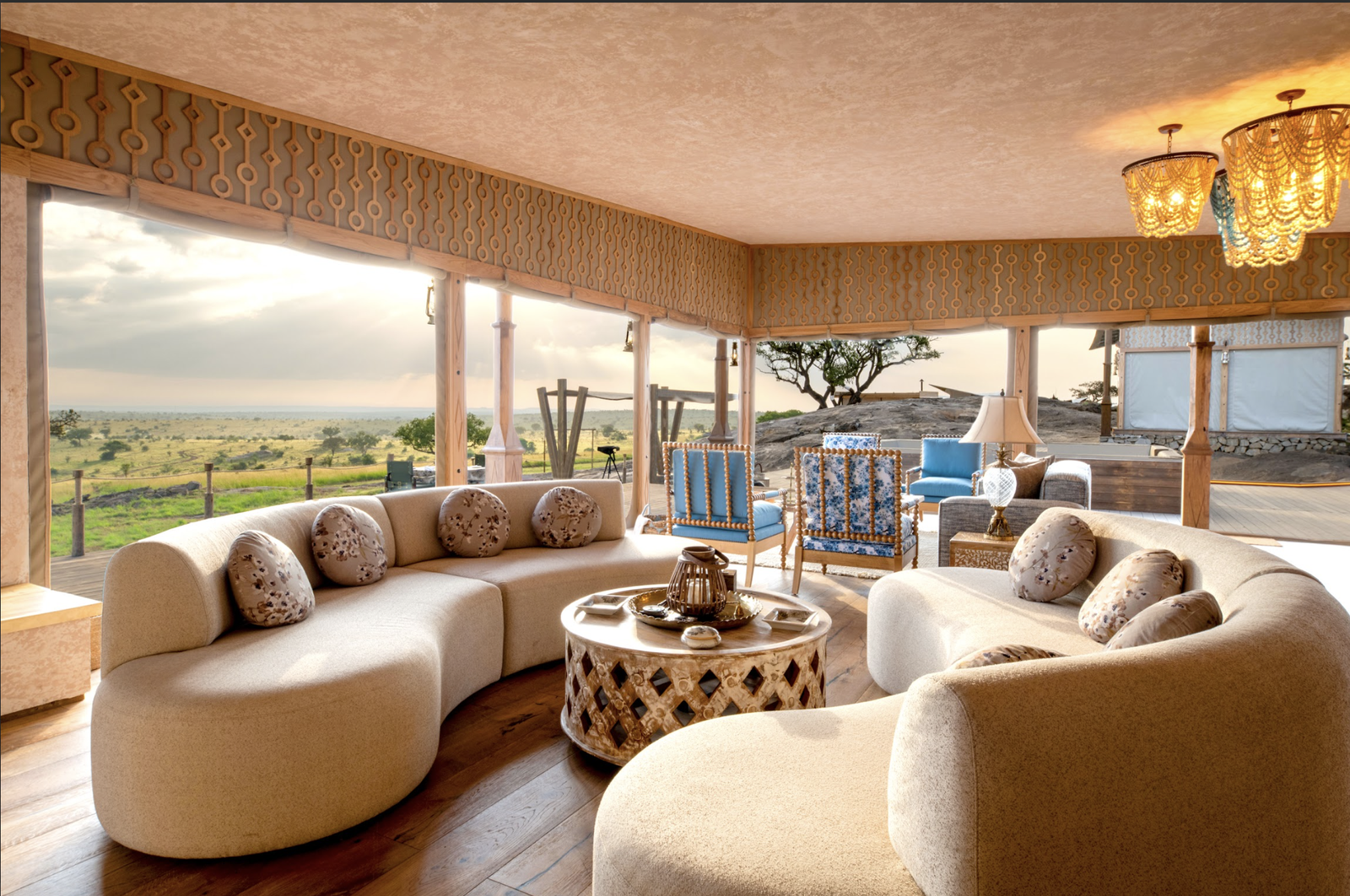
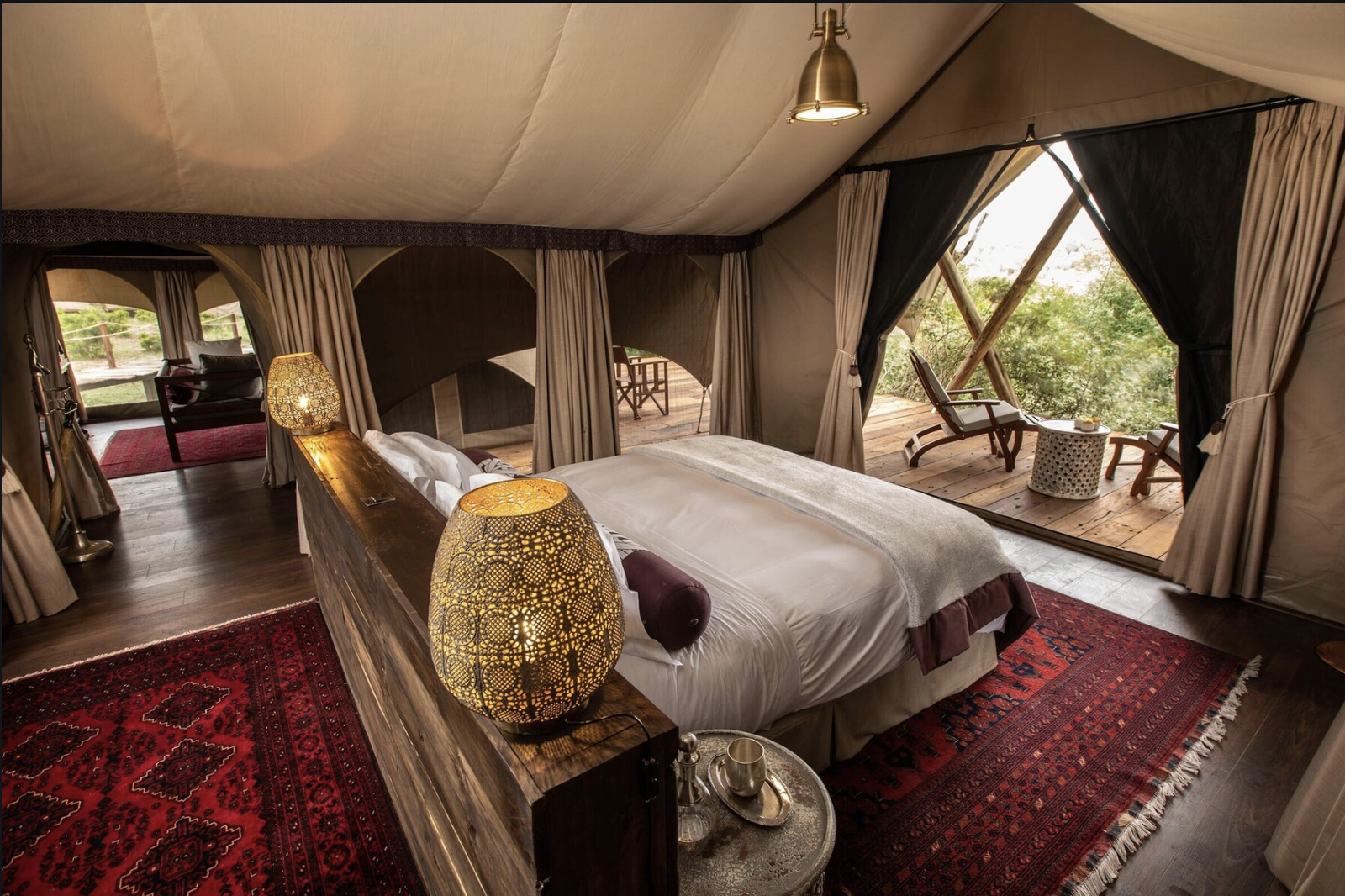
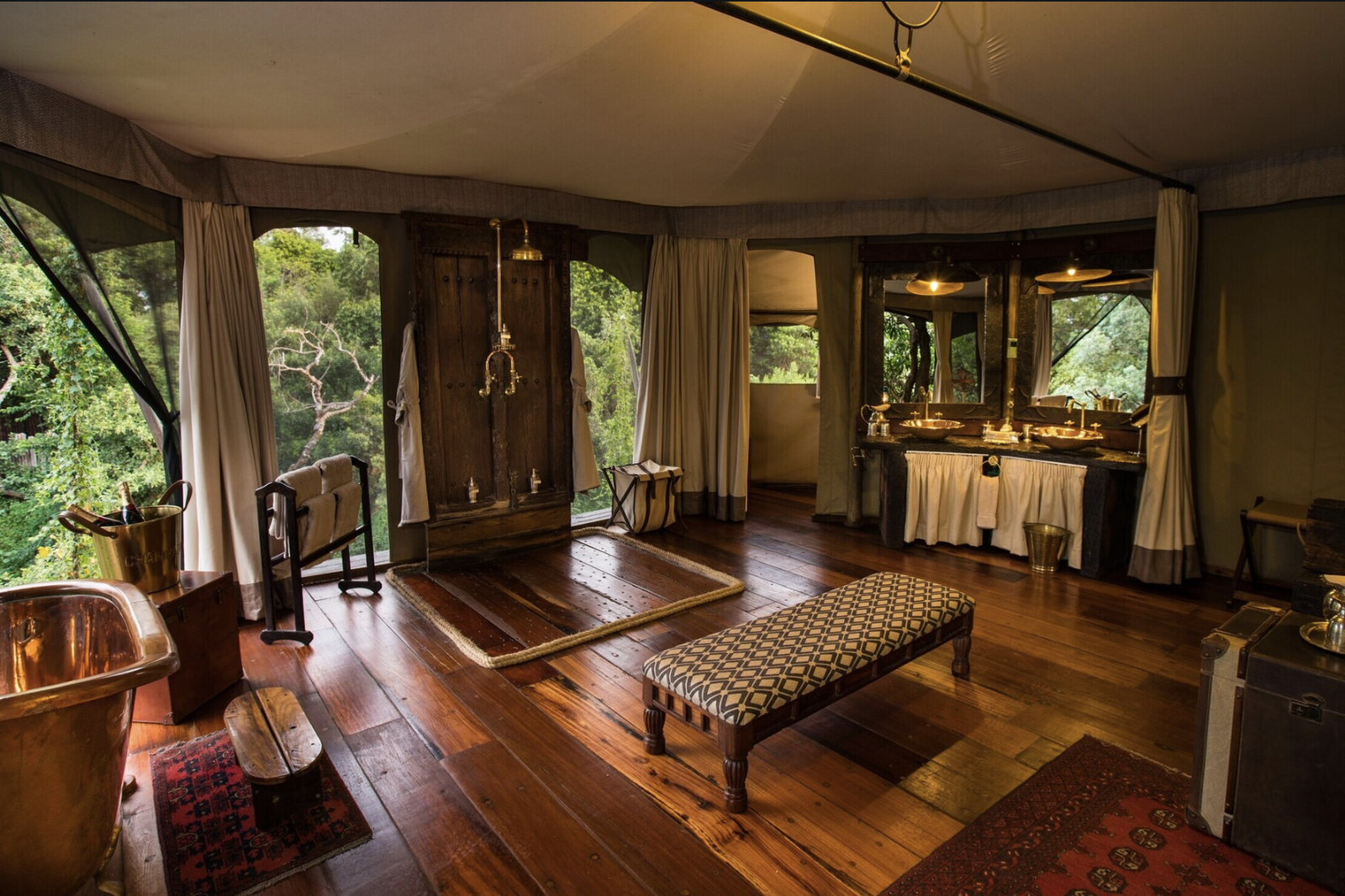
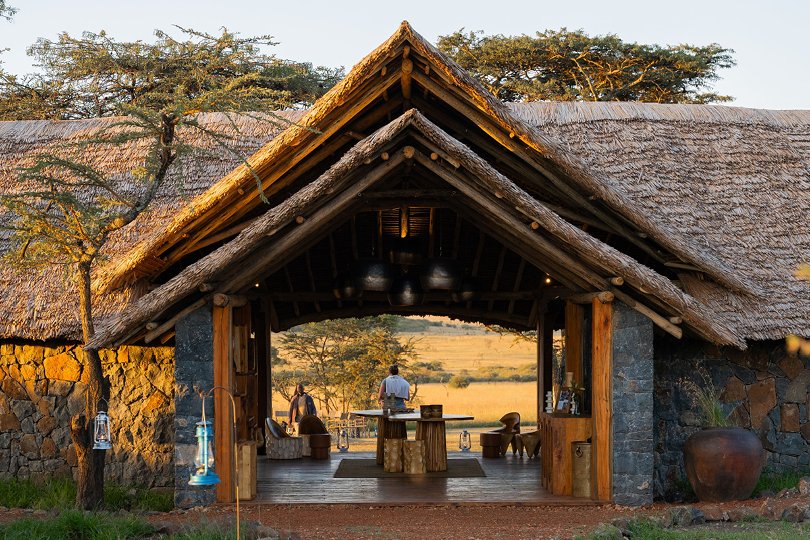
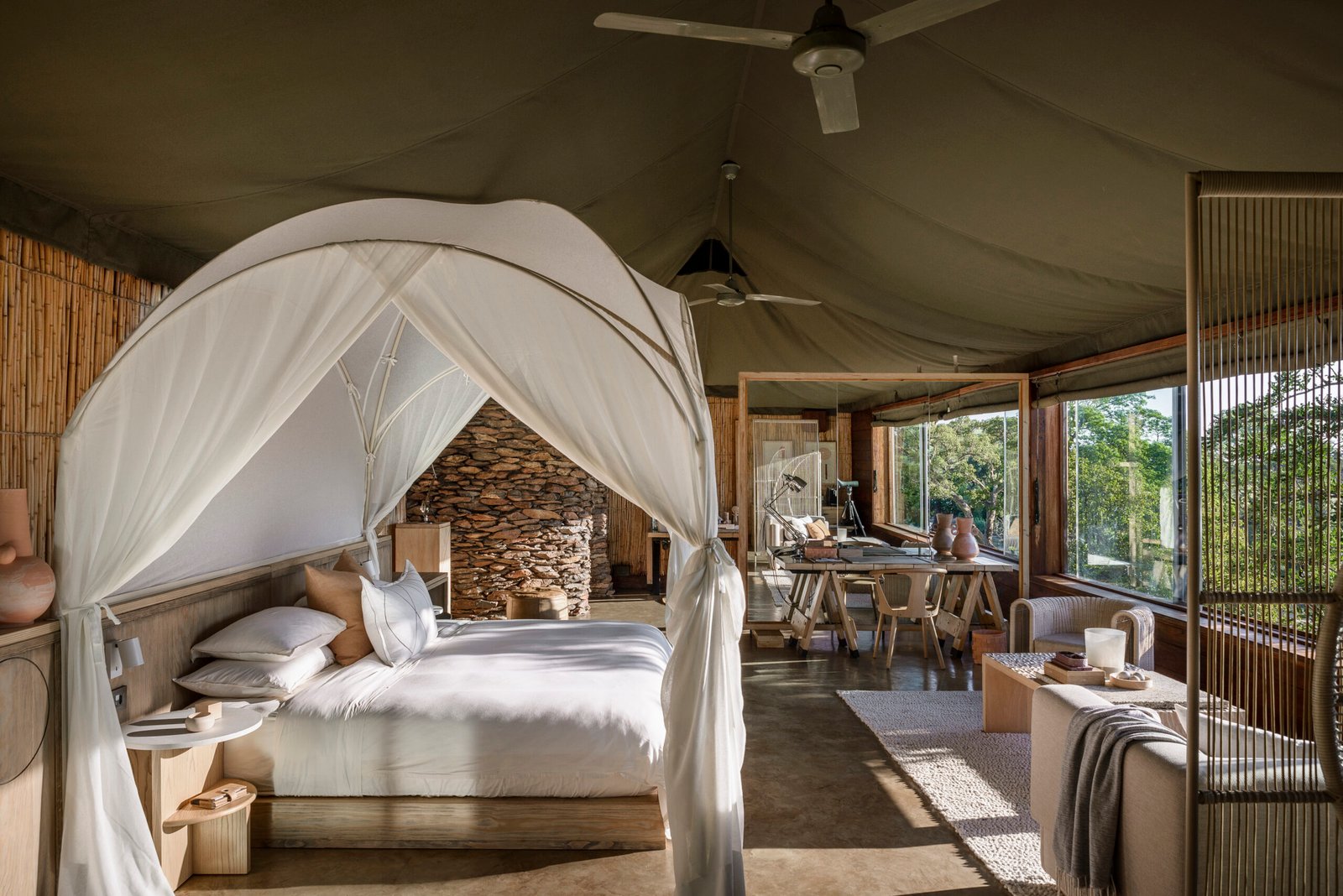
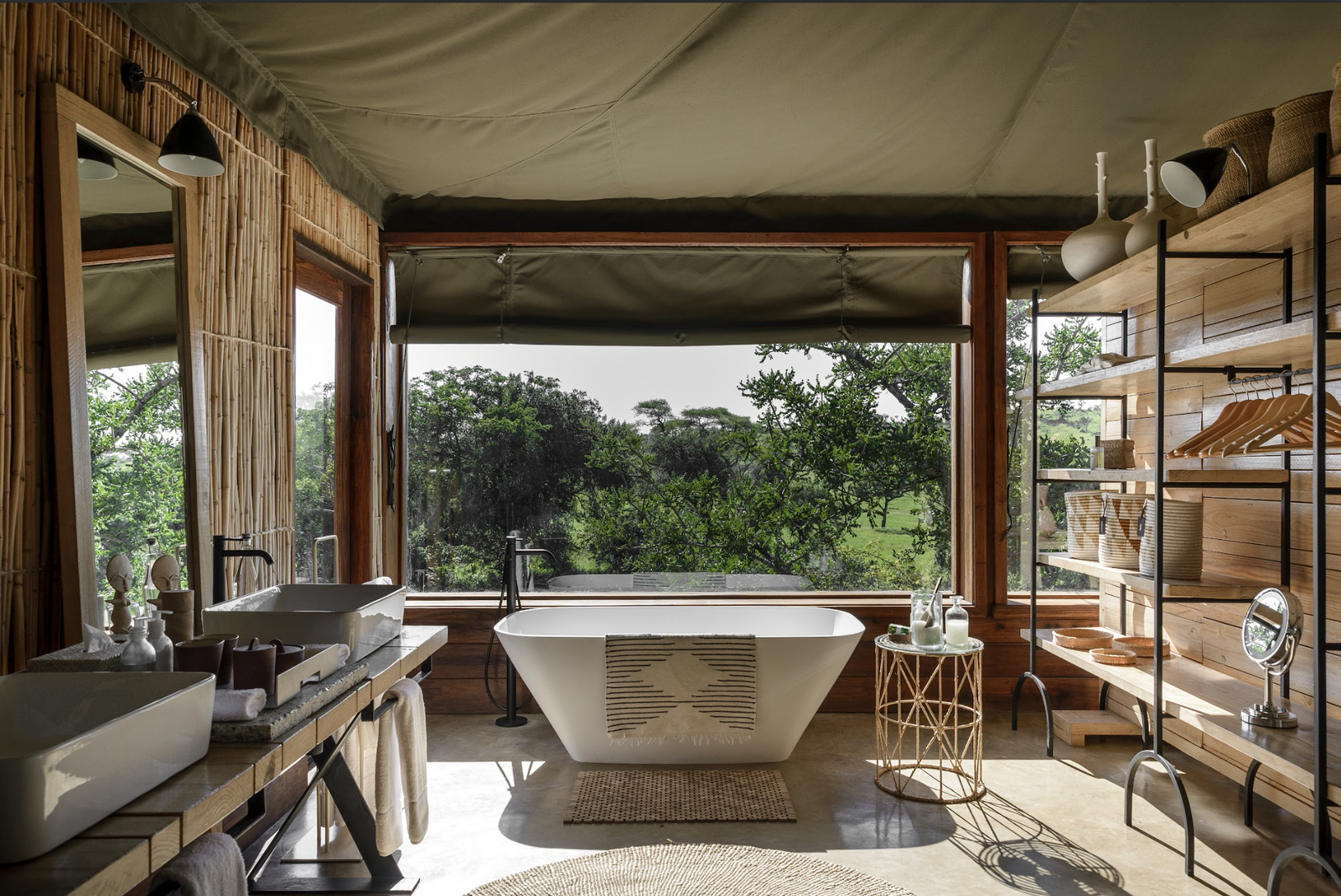
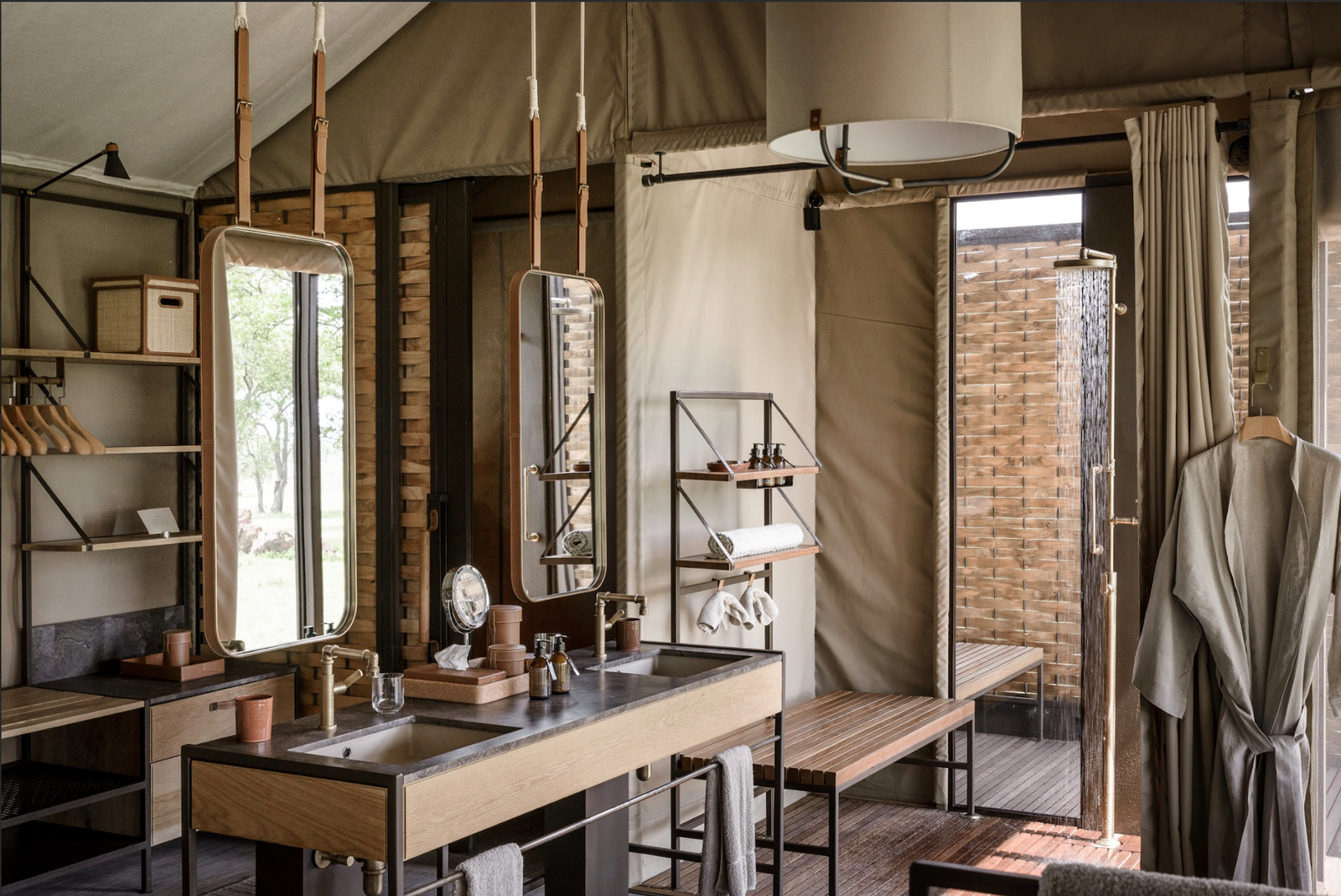
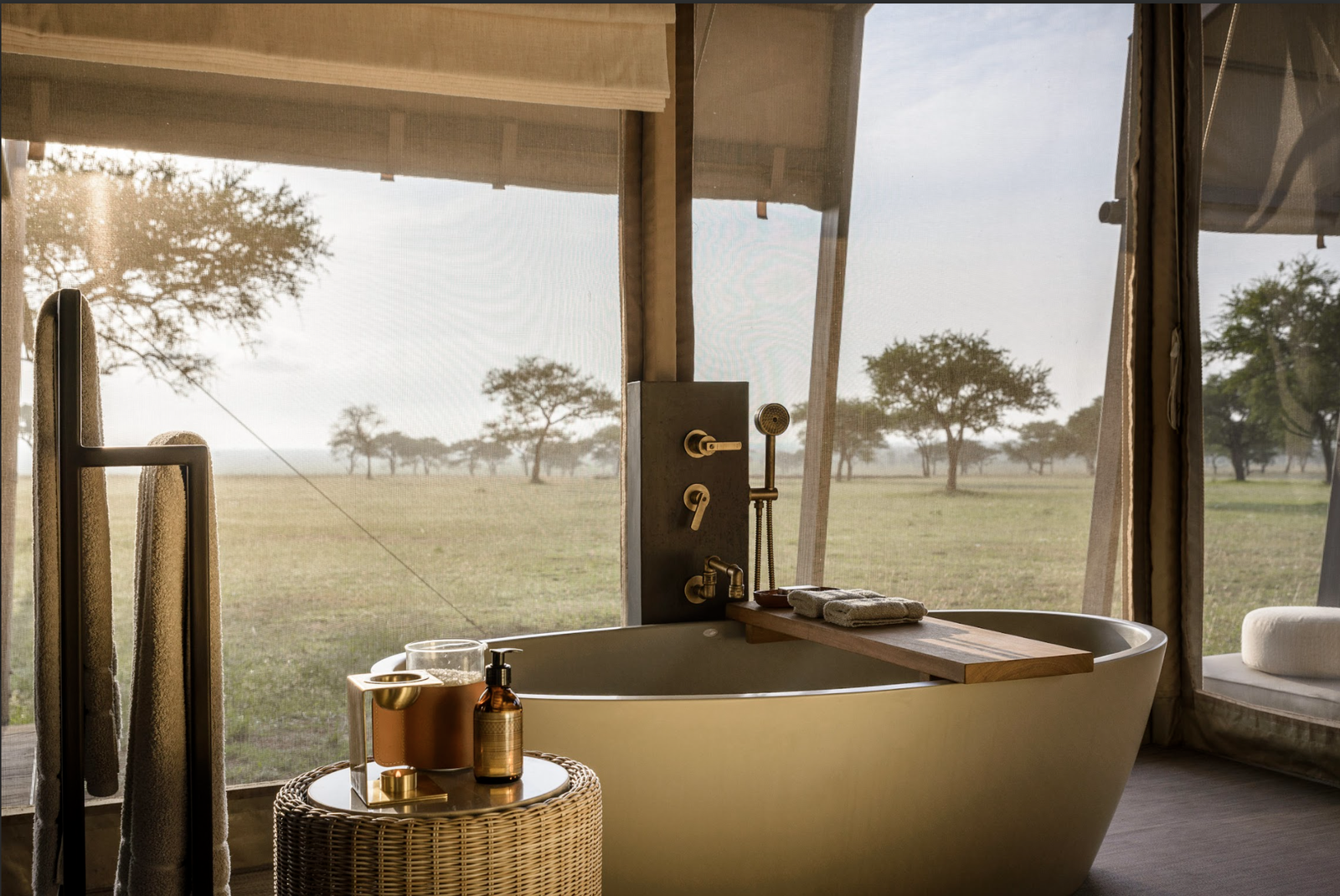
With Ameliya Safaris, you’ll experience the migration in absolute comfort and style. From expertly guided game drives and hand-selected luxury lodges to seamless service curated for American travellers, every detail is taken care of, so you can simply live the adventure.
Tour Highlights:
Flexible durations tailored to your travel plans
Front-row access to The Great Migration
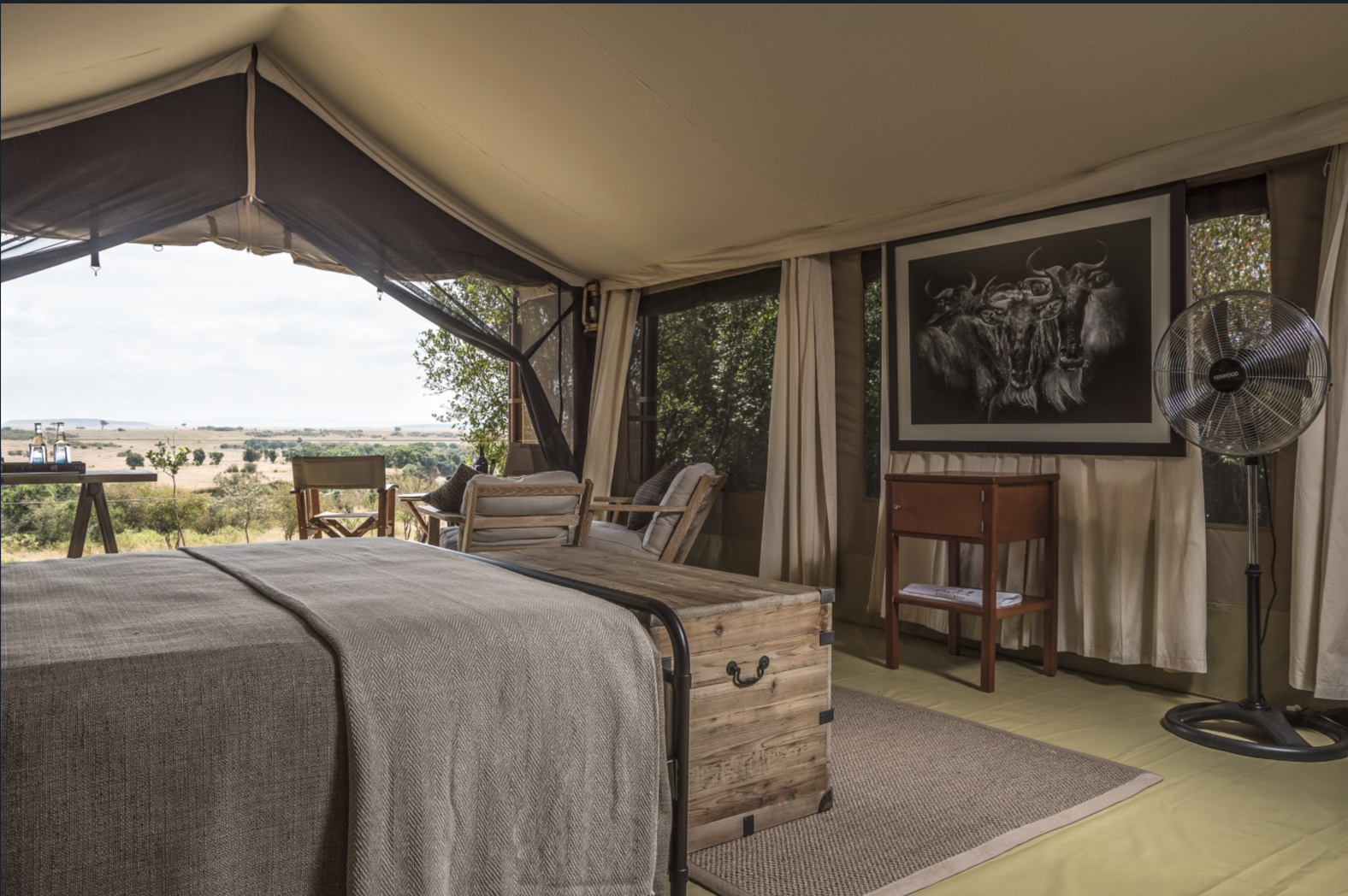
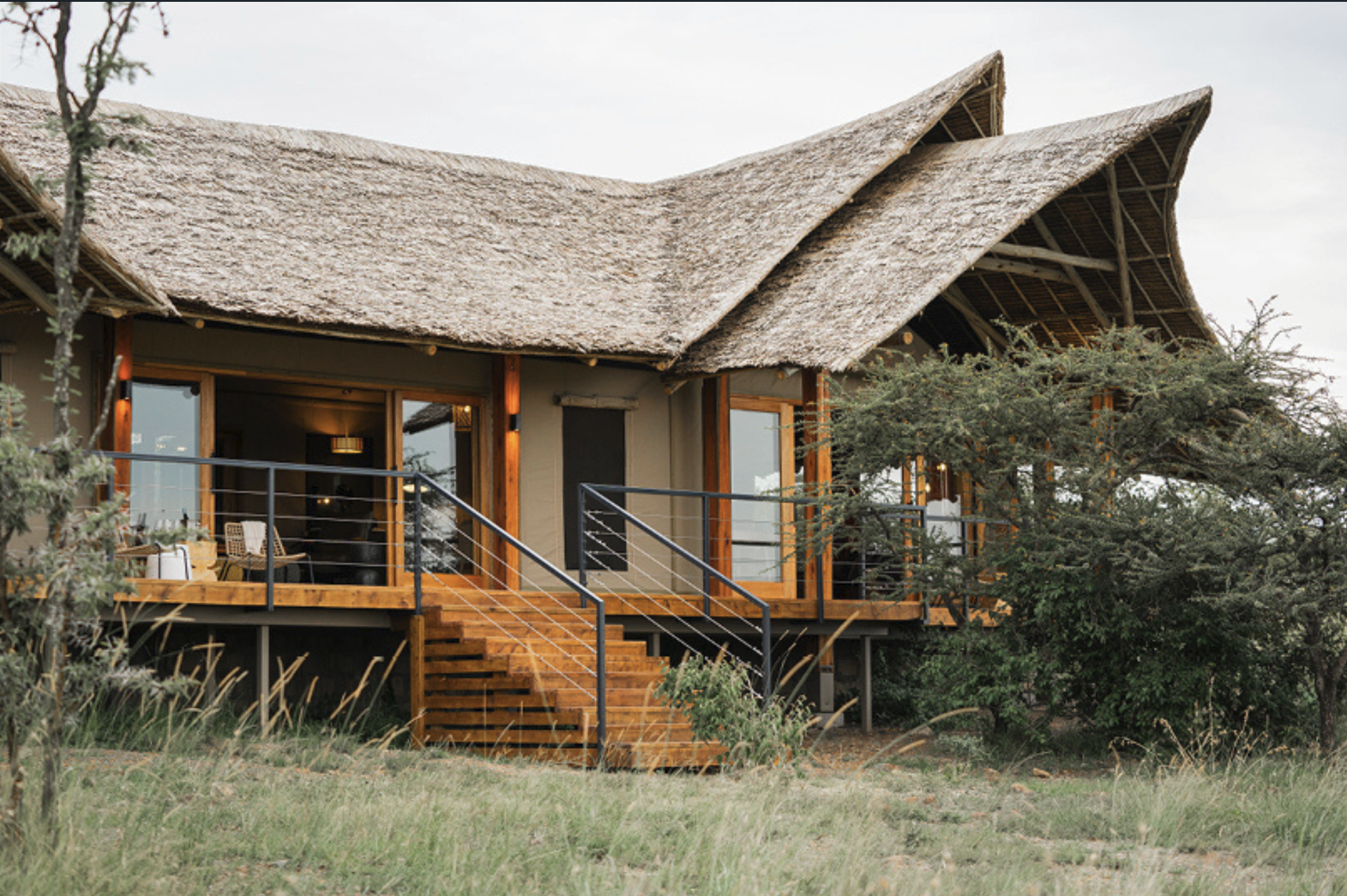
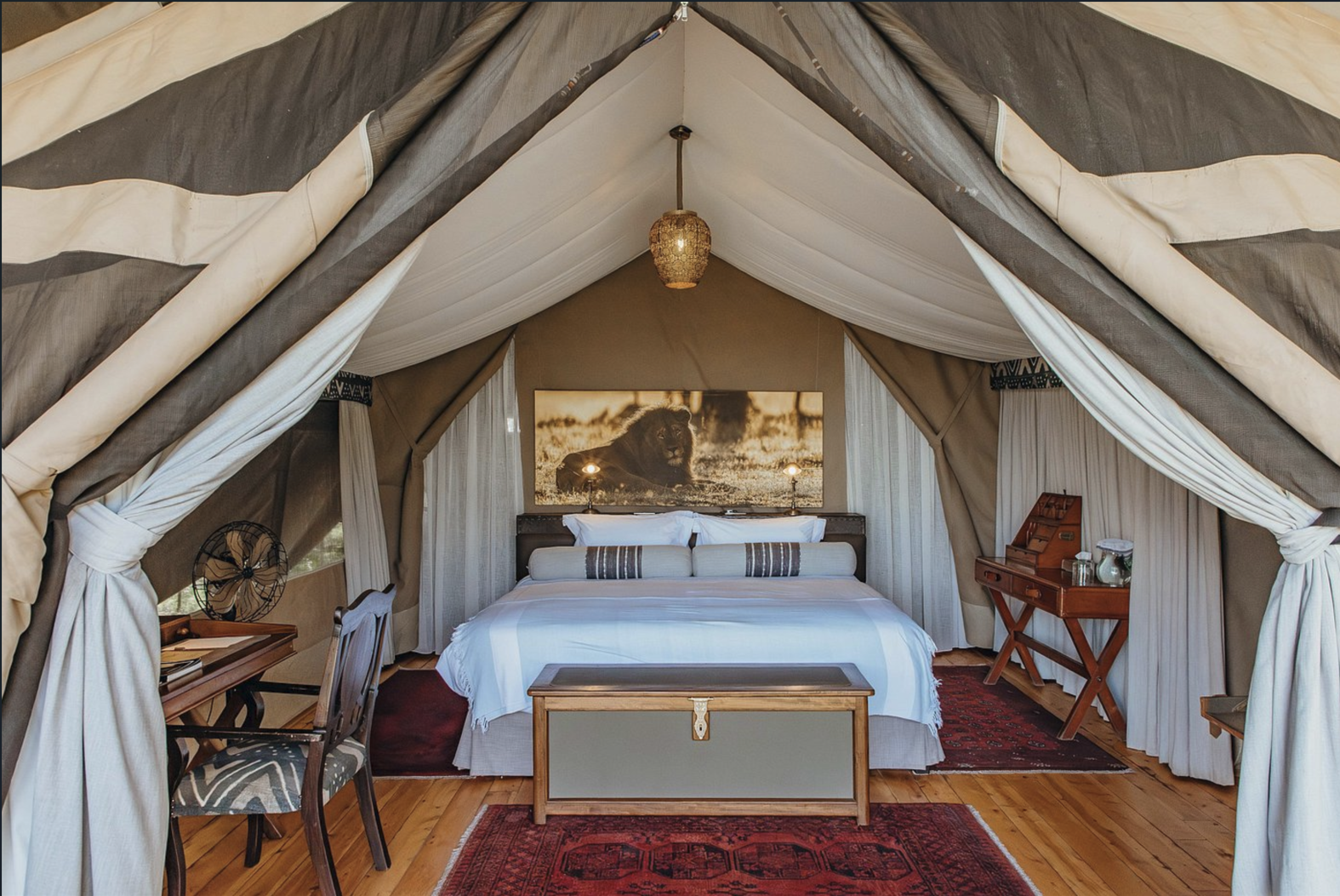
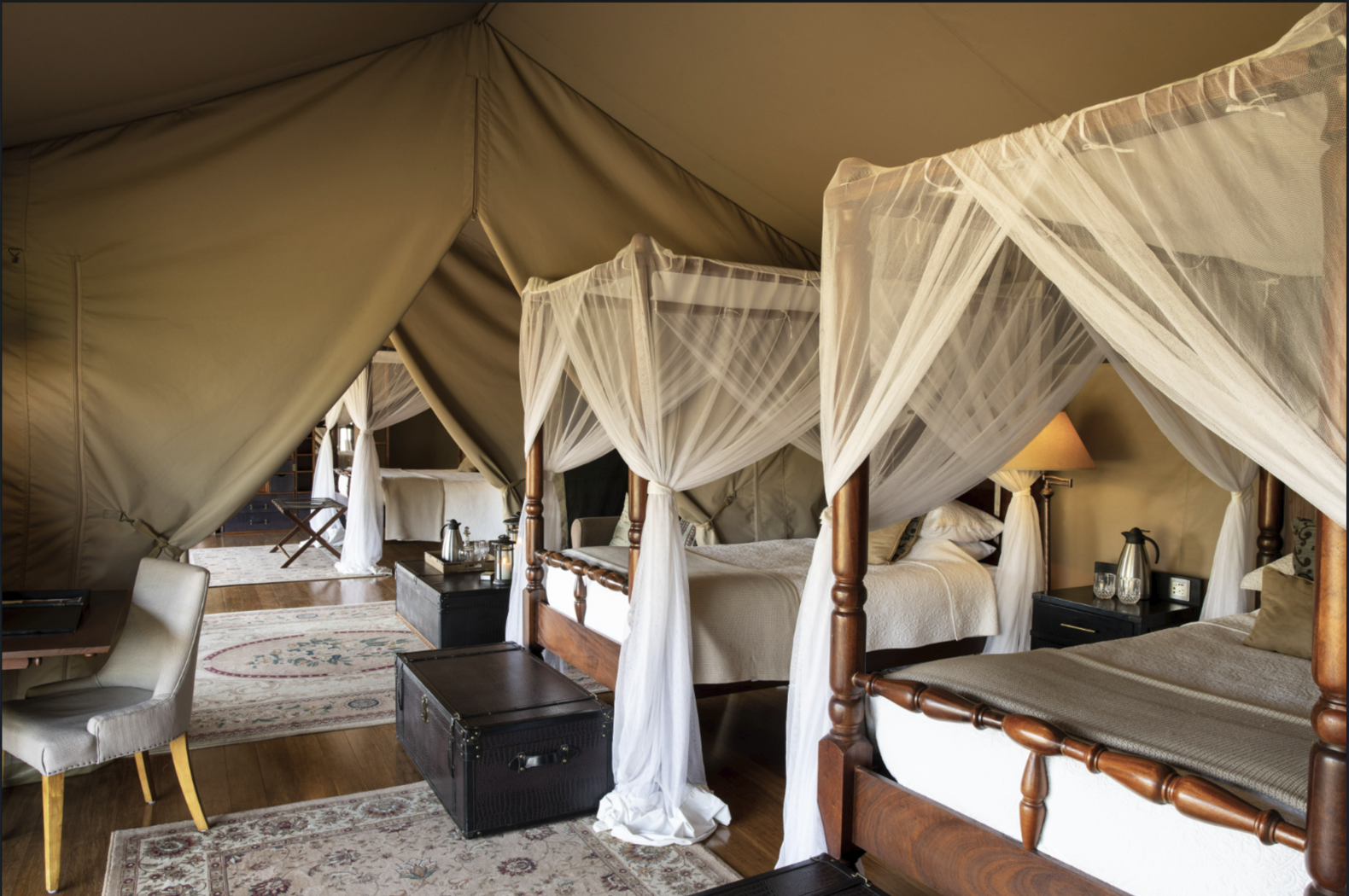
Handpicked mobile camps and permanent lodges
Guided walking safaris for a deeper wilderness connection
Exceptional wildlife photography opportunities
Cultural encounters with local communities
Costs Per Person
Camp
3 Nights/4 Days
4 Nights/5 Days
Classic Camps
US $ 3,495
US $ 4,505
Premium Camps
US $ 4,710
US $ 6,125
Luxury Camps
US $ 7,560
US $ 9,925
Ultra Luxe Camps
US $ 10,260
US $ 13,525
Ameliya's Great Migration Safari packages
Great Migration Safari Africa Packages
Choose from a wide range of Great Migration Safari Packages tailored by top safari experts at Ameliya Safaris USA. Whether you are from United States or any other part of the world, we offer complete trip options so that you may enjoy your tour to the fullest.
Classic Camps
3 Nights/4 Days – US $ 3,495 (per person)
4 Nights/5 Days – US $ 4,505 (per person)
Premium Camps
3 Nights/4 Days – US $ 4,710 (per person)
4 Nights/5 Days – US $ 6,125 (per person)
Luxury Camps
3 Nights/4 Days – US $ 7,560 (per person)
4 Nights/5 Days – US $ 9,925 (per person)
Ultra Luxe Camps
3 Nights/4 Days – US $ 10,260 (per person)
4 Nights/5 Days – US $ 13,525 (per person)
Enquire Now
Once you’ve submitted the form, an Ameliya Representative will connect with you within 24 hours to help you plan your safari getaway. Please Note: We advise you to go through the Rates (Mentioned Above), Payment Terms, and Inclusions & Exclusions (Mentioned Below) before submitting your details.
Inclusions and Exclusions
Inclusions
Accommodation, all meals, tea/coffee, laundry services.
On-call concierge service.
Roundtrip transfers via a scheduled charter flight from Nairobi to Masai Mara.
Domestic beer & wine and select liquor, safari sundowners, bush breakfasts, and WIFI.
Conservation Levy, morning and evening game drives in a shared vehicle (exclusive vehicles are chargeable), and bush walks.
Activities as indicated on the itinerary
Flying doctors medical evacuation cover
Exclusions
National Park Fees
Taxes as applicable
Tips, international flights & transfers, additional activities, visa fees, travel & medical insurance, exclusive vehicle.
All other expenses not mentioned in the “inclusions” above will have to be borne as additional expenses by the participants
Park Fees and Additional Costs
Additional Costs
Park Fees
Mandatory for all visitors
Park
Visitor Type
Amount
Masai Mara National Reserve
Adult (17+)
$200 per day
Child (9–17 years)
$50 per day
Child (0–8 years)
Free
Serengeti National Park
Adult (16+)
$83 per day
(5–15 years)
$24 per day
Child (0–5 years)
Free
Serengeti Concession Fee
Mandatory for all visitors
Season (2025)
Visitor Type
Amount
High Season
Adult (16+)
$70.80 per day
Child (5-15 yrs)
$11.80 per day
Child (0-5)
Free
Low Season
Adult (16+)
$59 per day
Child (5-15 yrs)
$11.80 per day
Child (0-5)
Free
Tanzania Tourism Dev Levy
1% of Accommodation
Private Vehicle Charges
While your Amleiya Itinerary is inclusive of Game drives in shared vehicles, private vehicles can be arranged (with advanced notice) through our accommodation partners at the following costs-
Classic Camp
$350 per day
Premium Camp
$475 per day
Luxury Camp
$800 per day
Ultra Luxe Camp
$1365 per day
*Please Note-
These prices are applicable per person (sharing for 2)
GST & TCS will be applicable for all Indian citizens going abroad, as per Government of India regulations.
Payment Terms
Payment Terms
All tours operate on 100% advance payment.
50% need to be paid at the time of booking, 25% is due 120 days prior to the trip start date and 25% 90 days prior.
The preferred mode of payment is Bank Wire. All card transactions will incur a 3.5% service fee.
Rates are subject to change and are not applicable for Christmas/New Years. Rates are valid for 2025 only. Rates for 2026 will incur a 10% hike.
Any changes in government taxes and park/conservancy fees have to be borne by the guests.
We reserve the right to revise any published costs without prior notice. However, confirmed bookings will be honored.
Cancellation Policy
Cancellation Policy
50% is non-refundable once the payment is done.
The remaining amount will be refunded if cancellation is done 120 days prior to the tour start dates. Between 90-120 days, 35% is refunded.
No refund if cancellation is done between 0 – 90 days of the trip start date. Amendment in dates within 90 days from arrival is treated as a cancellation.
Please note that the date of written communication (e-mail) of intent to cancel will be the date considered for the calculation of the cancellation fees.
The cancellation amount is calculated as per the total booking amount and not as per the advance deposited.
No refunds in case of refusal to use a service/activity mentioned in the itinerary.
All refunds are processed minus bank charges.
Ameliya's Great Migration Safaris
What is the Great Migration?
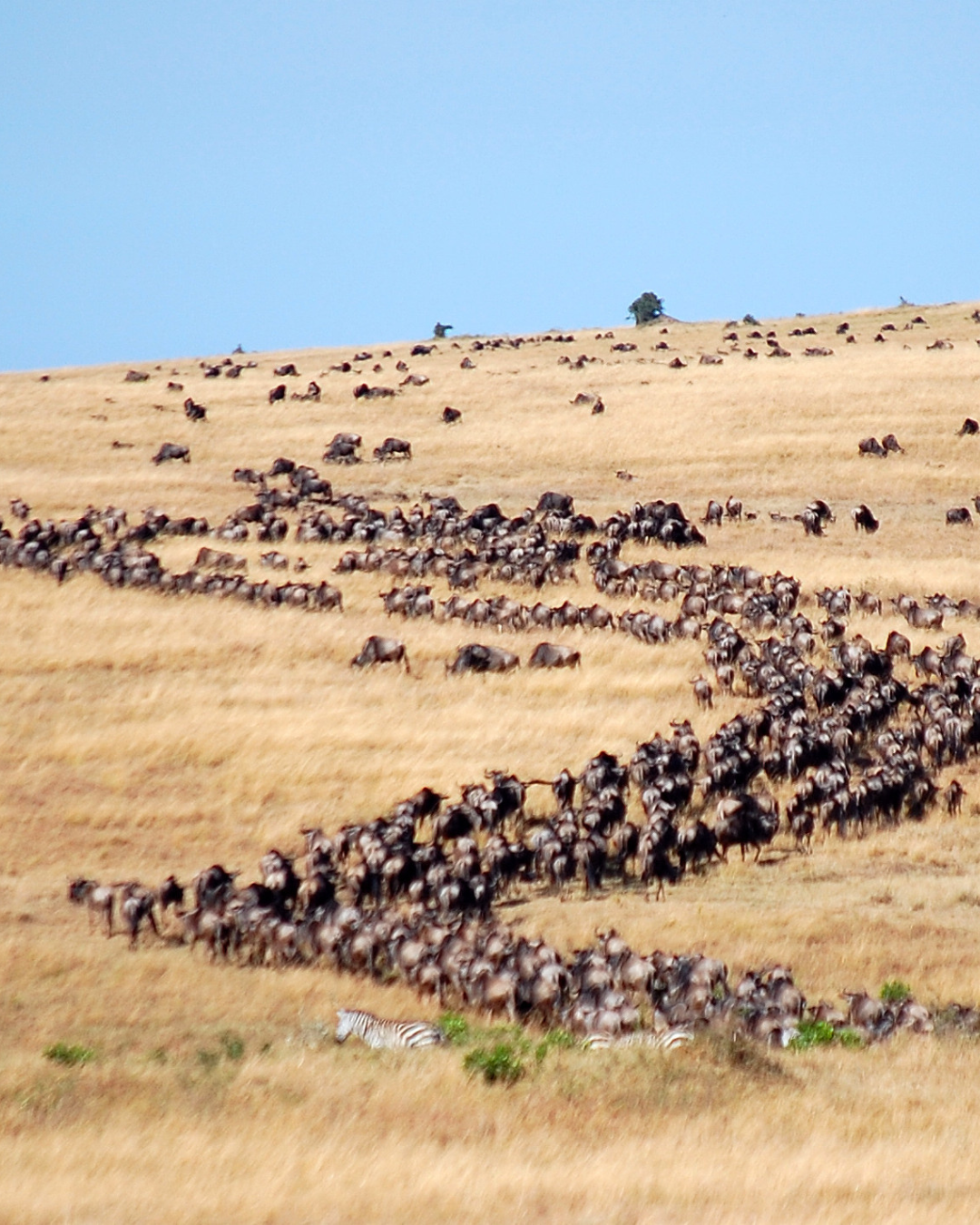
The Great Migration is the largest movement of animals on Earth, with vast columns of wildebeest — sometimes visible even from space.
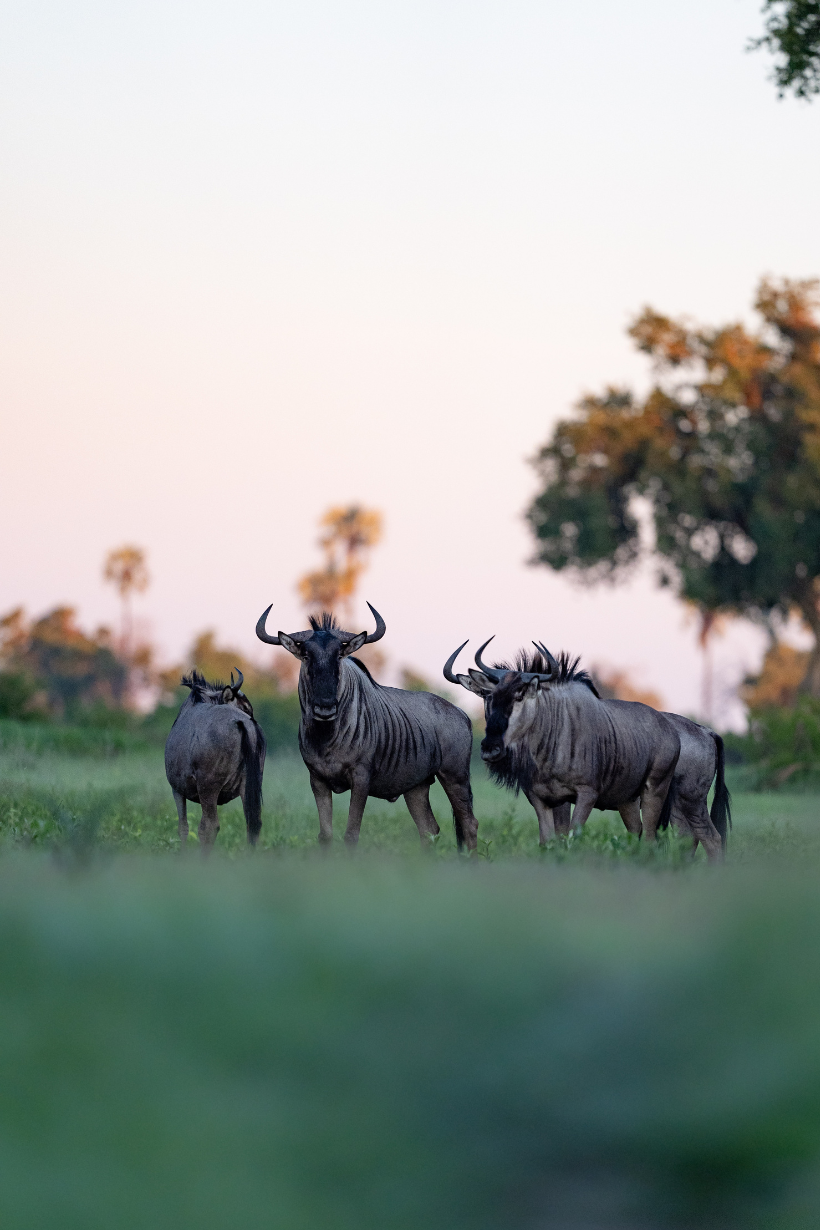
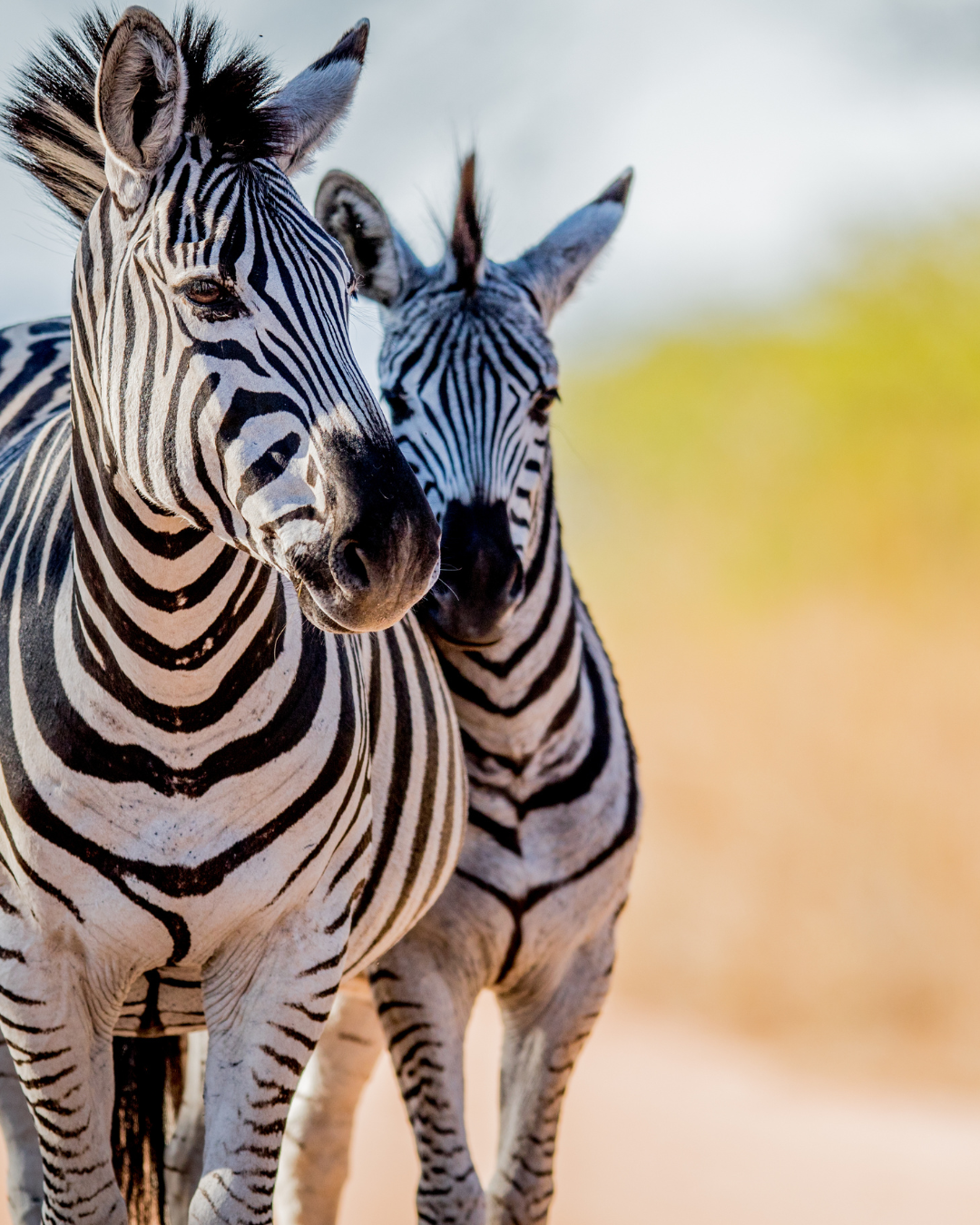
Over 1.2 million wildebeest, accompanied by 300,000 zebras, topis, and gazelles, journey through the Serengeti-Mara ecosystem in search of fresh grass and water. Each animal covers 800 to 1,000 kilometers, guided by instinct and the rhythm of the rains.
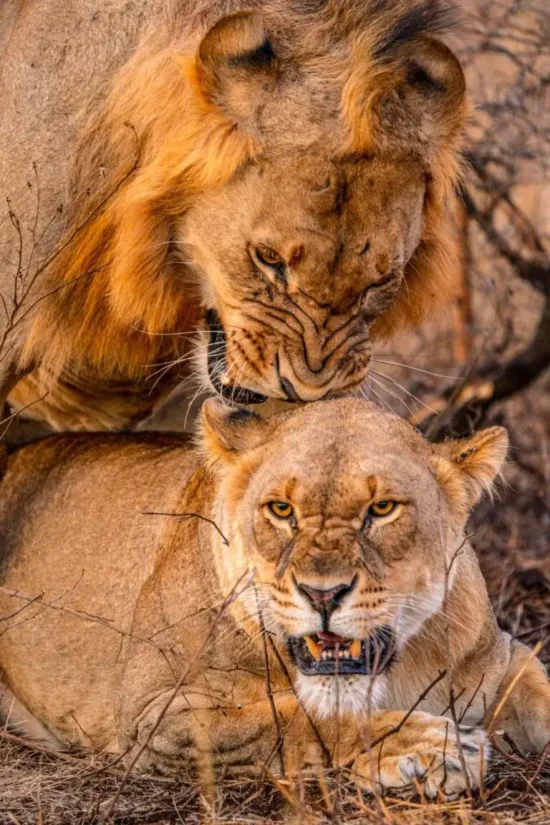
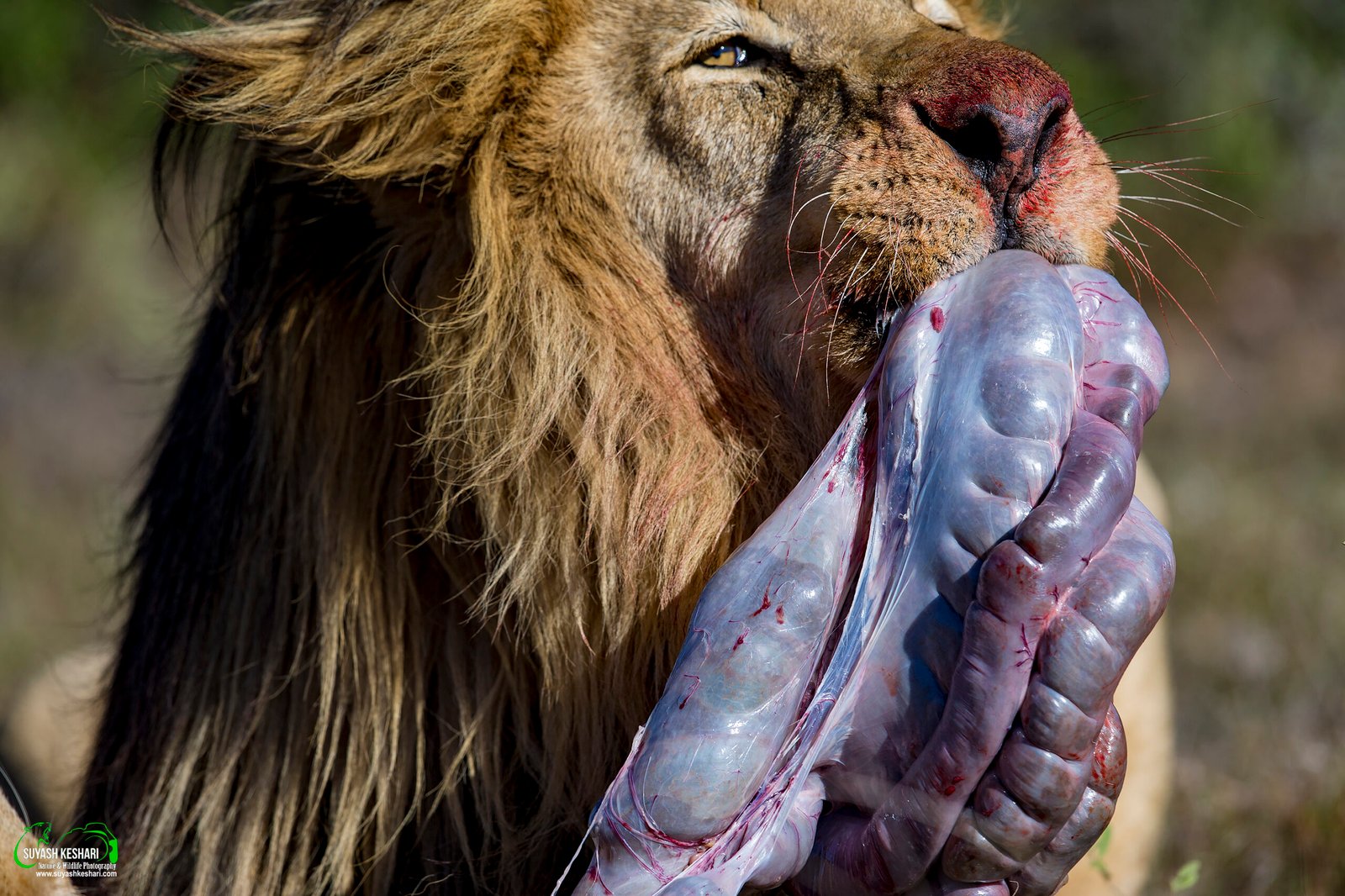
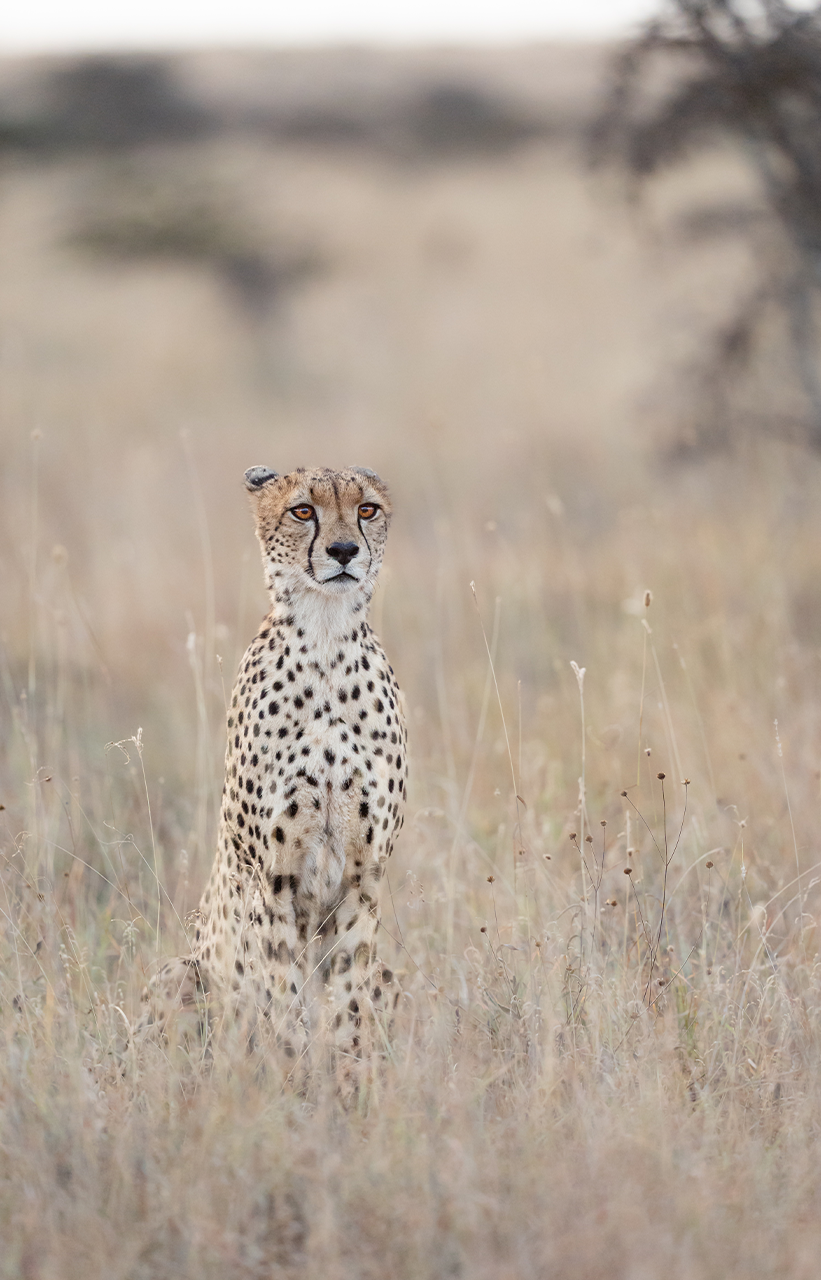
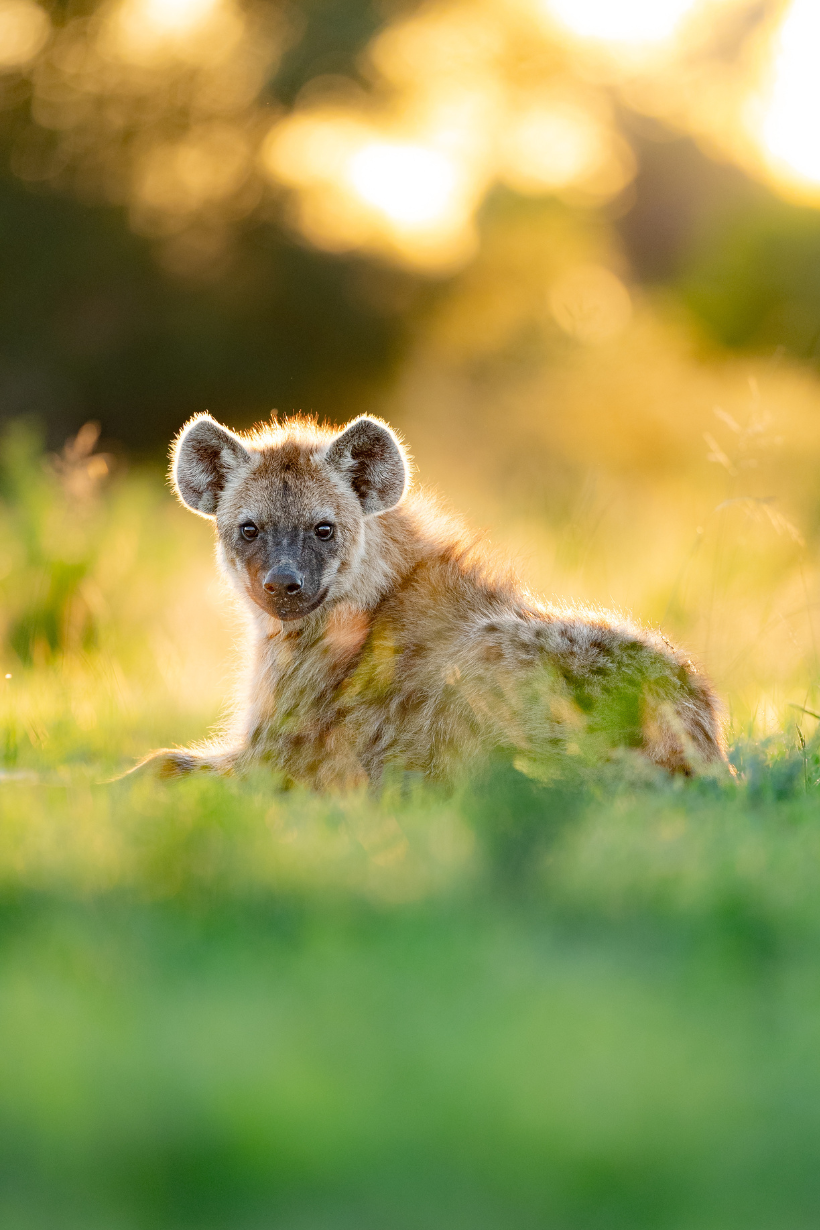
But survival is never guaranteed. Lions, leopards, cheetahs, hyenas, and crocodiles lie in wait, ensuring only the strongest (or the luckiest) endure. The treacherous river crossings are particularly unforgiving, with steep banks, rushing currents, and ever-watchful predators.
Great Migration Safari Africa Timeline
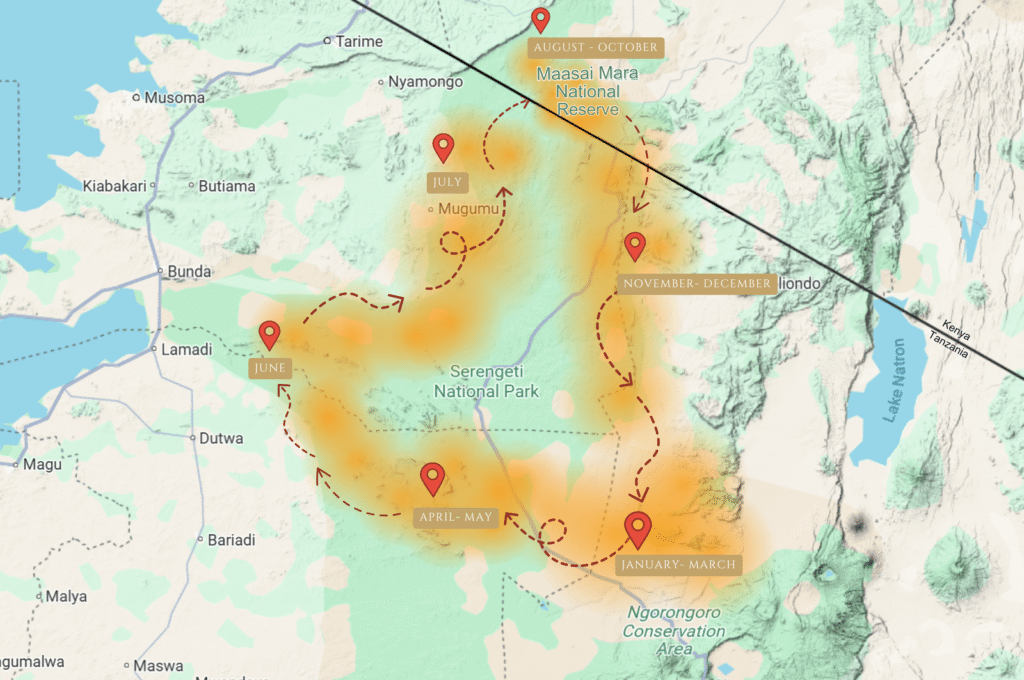
Contrary to popular beliefs, The Great Migration is a year-round event, not a continuous forward motion at all times. More than 1.2 million wildebeest and 300,000 zebra, along with topi and other gazelle constantly move in a cyclical journey through the Serengeti-Mara ecosystem in search of nutritious grass and water. They go forward, backward and fan out across the plains. They mill around, they split up, they join forces again, they walk in a line, they spread out or they hang around together. Even if you don’t catch the legendary river crossings, you’re in for an incredible treat.
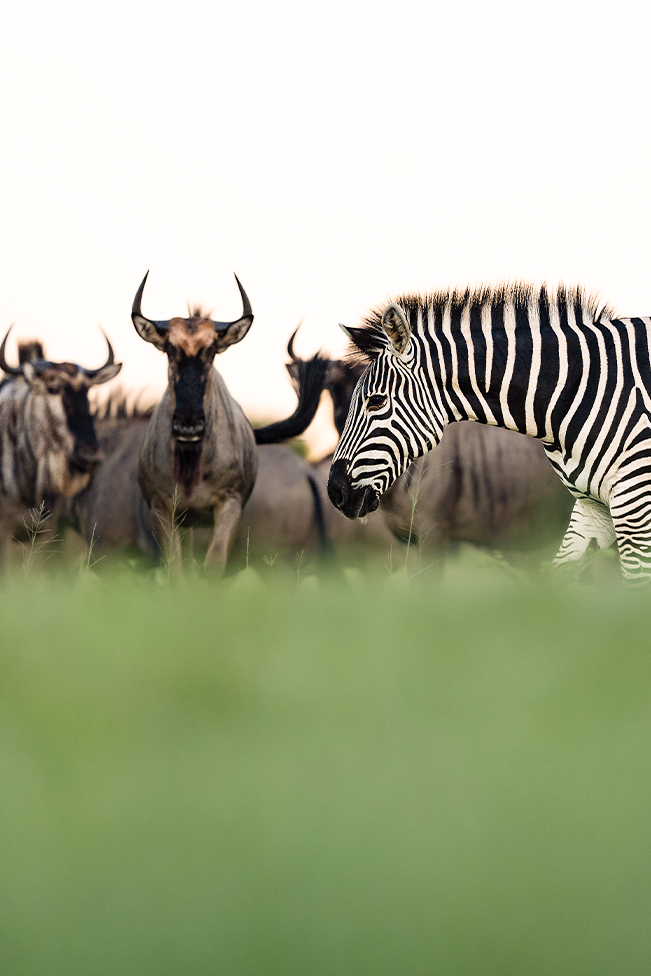
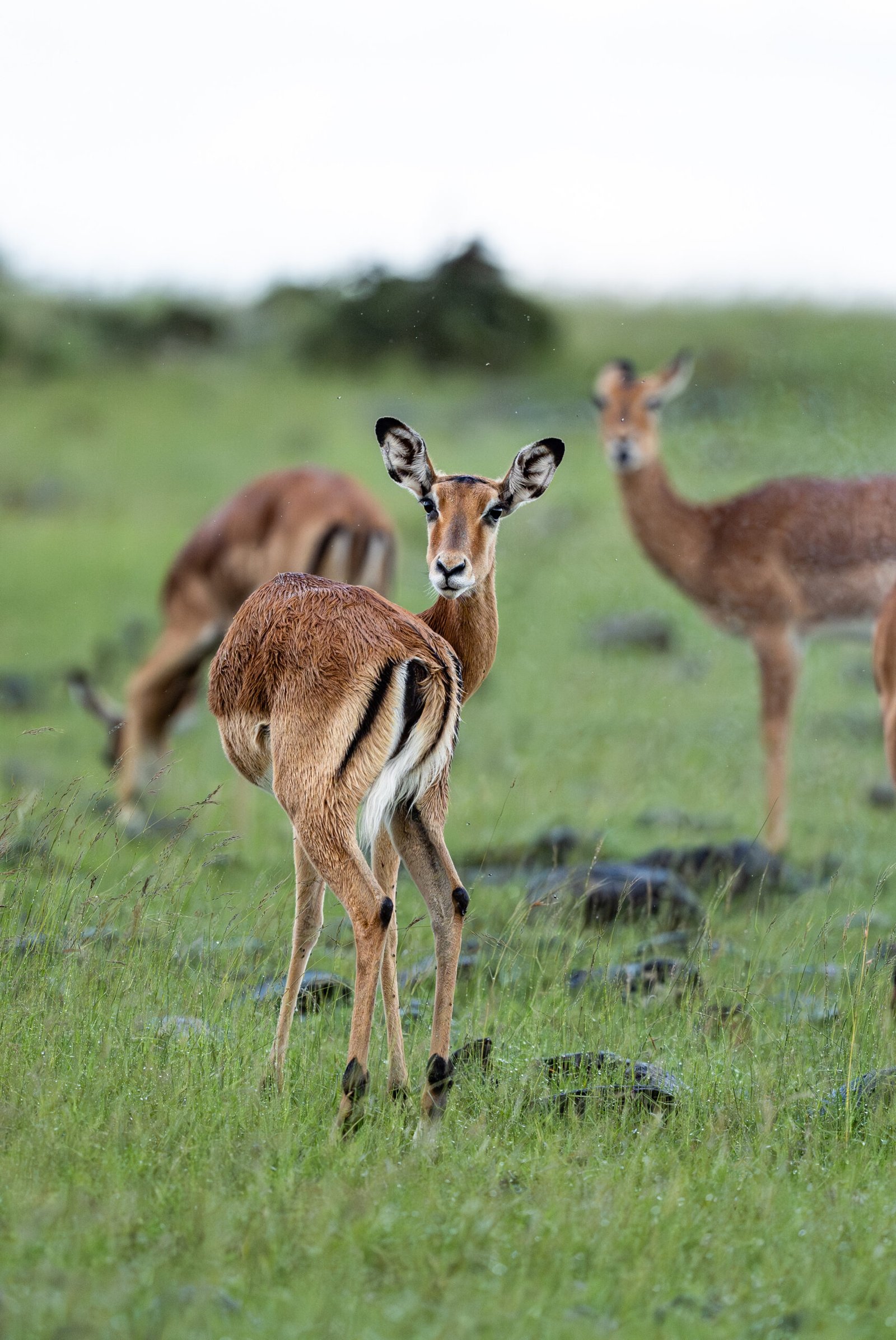
The migration follows an ancient route from Tanzania’s Ngorongoro Conservation Area, through the Serengeti, and into Kenya’s Masai Mara, before circling back south. Each grazing species plays a part — wildebeest feed on the tallest grass, zebras trim the mid-level growth, and gazelles finish what remains, ensuring balance across the plains.
Though no one knows exactly how wildebeest navigate, it’s believed they sense rain and storms from over 50 kilometers away, chasing the promise of greener pastures. It’s nature’s most extraordinary display of resilience — a timeless spectacle, forever in motion.
The Great Migration- Movement Pattern Throughout the Year
The Great Migration in January, February, and March.
The Great Migration Safari in January, February, and March
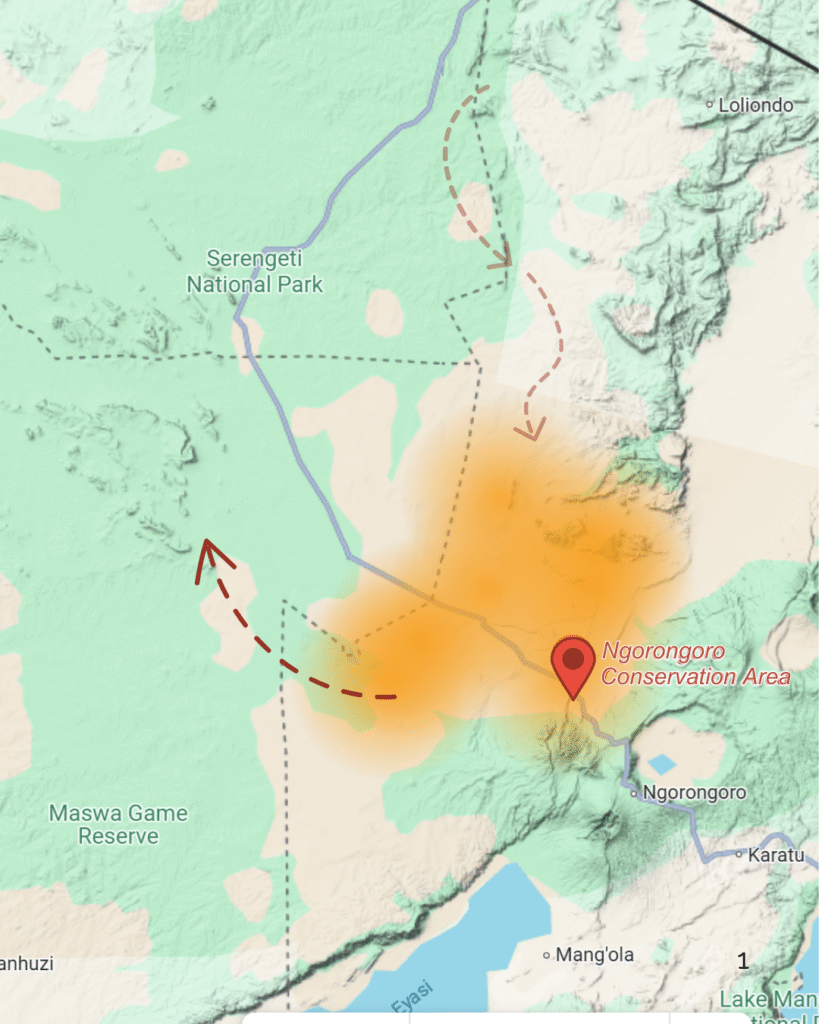
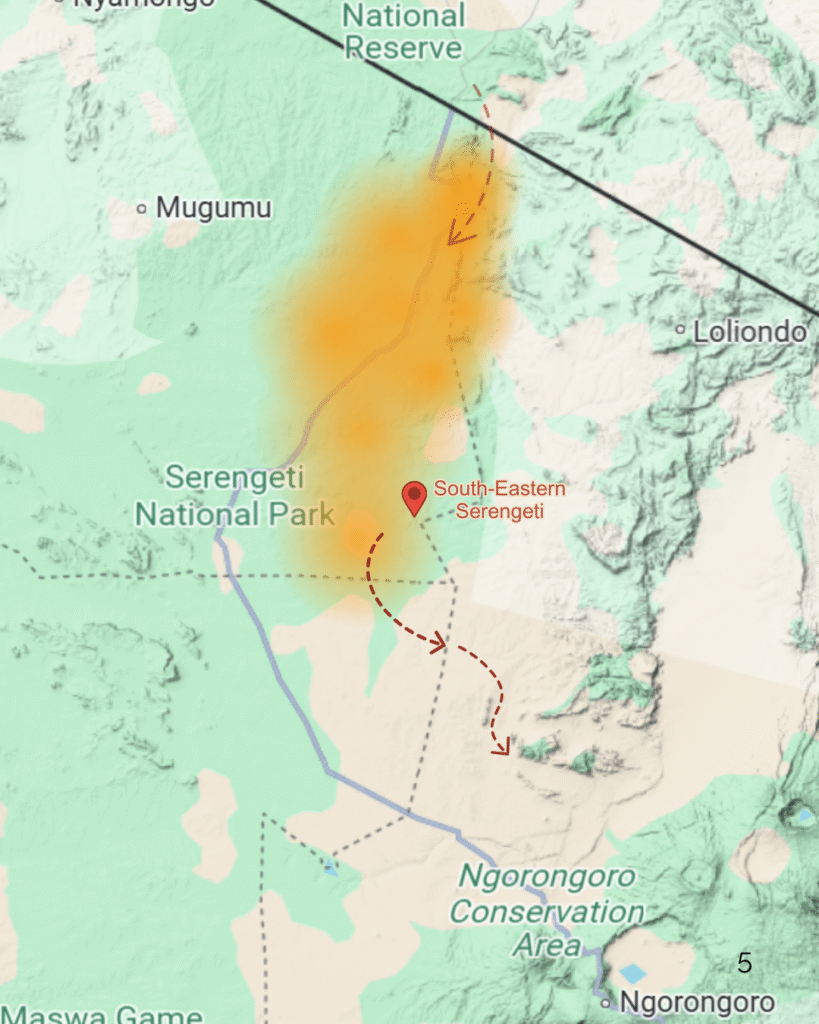
January marks the beginning of the Great Migration, a time when vast herds of wildebeest gather on the short-grass plains of the Ndutu region in southern Serengeti and the northern Ngorongoro Conservation Area in Tanzania (though not inside the Crater). These nutrient-rich plains provide the ideal setting for calving season, as thousands of wildebeests give birth to their young.
By late January, the spectacle intensifies. Around 8,000 calves are born each day over a span of just two to three weeks, transforming the savanna into a sea of life. Yet, this abundance also draws predators – lions, hyenas, and cheetahs, creating one of the most dramatic and essential chapters in the migration’s story.
It’s nature at its most raw and riveting, a reminder of the delicate balance between life and survival that defines the wild heart of Africa.
The Great Migration in April and May
The Great Migration in April and May
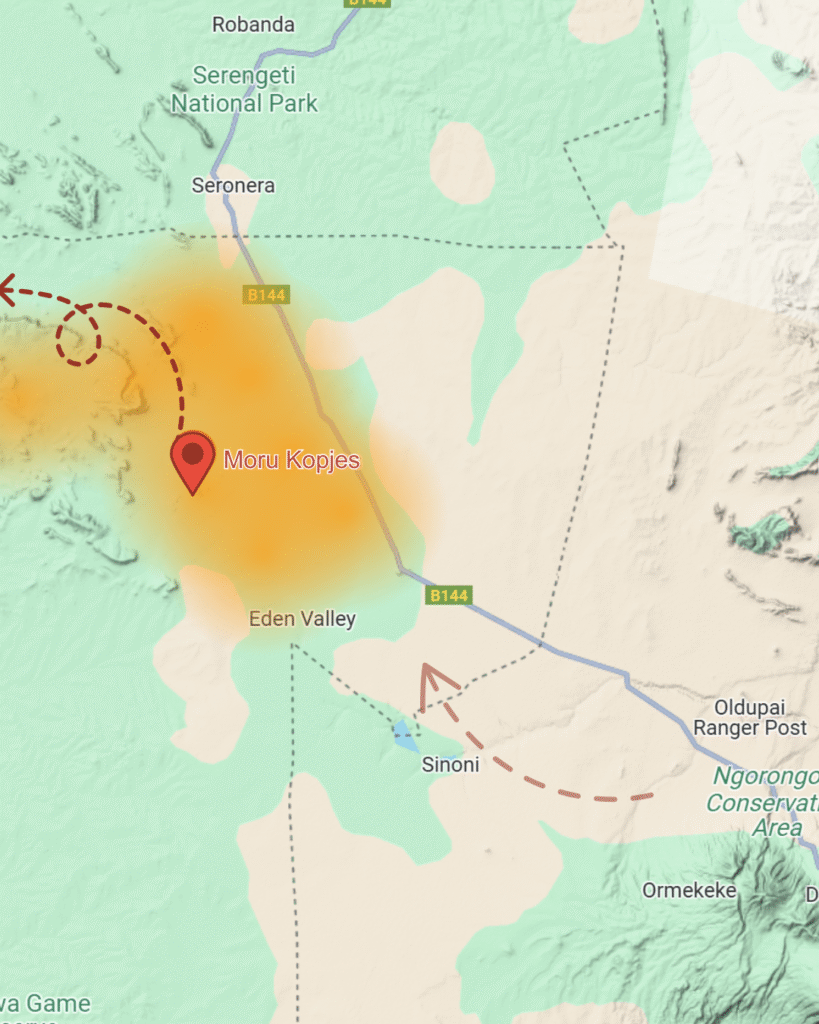
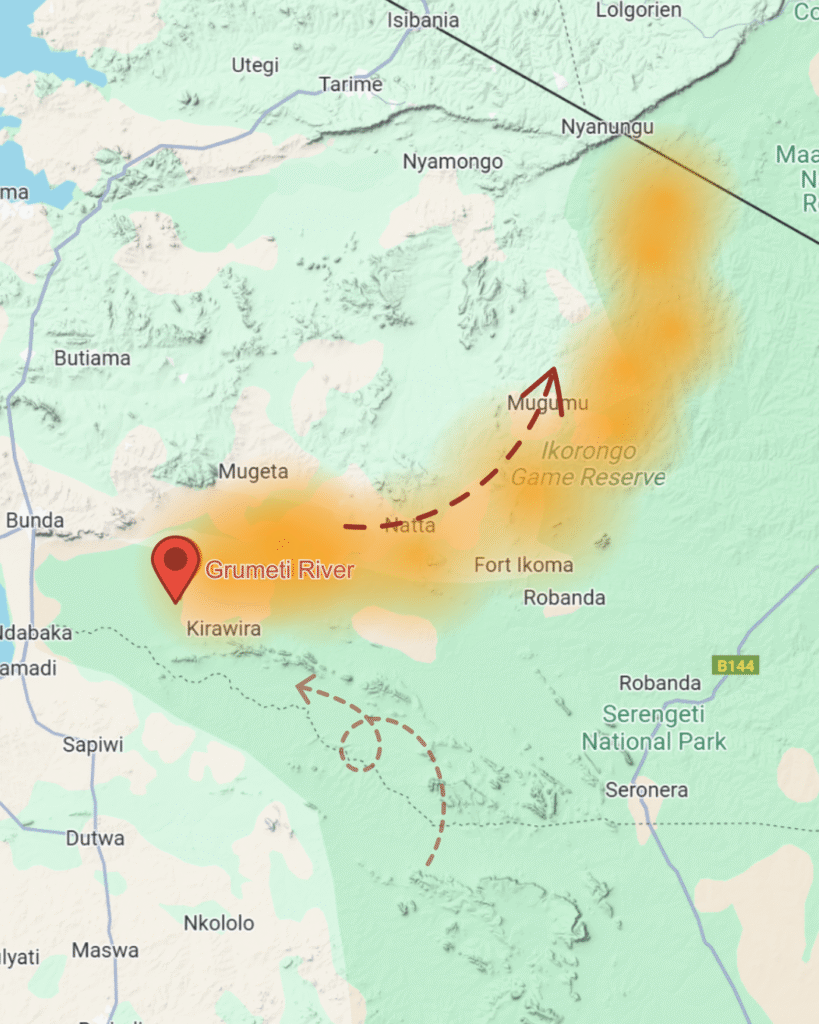
Following the birthing season in February and March, the Great Migration begins to move northwest by April, as thousands of wildebeest, zebras, and antelope seek the fresh, green grasses of the central Serengeti. By May, the herds gather near the Moru Kopjes, forming breathtaking columns that stretch for miles across the plains. This is also the start of the annual rut – a season of fierce yet spectacular displays as male wildebeest clash for dominance while the herds continue their steady march.
As the migration pushes toward the Western Corridor, the journey meets its next great test – the Grumeti River crossings. Though smaller than the famed Mara crossings, these encounters are no less captivating. Massive crocodiles lie in wait beneath the murky water, adding tension to every movement of the herd.
For travelers, April to June offers one of the most rewarding times to visit the Serengeti — fewer tourists, uninterrupted wildlife viewing, and an authentic sense of wilderness. With Ameliya Safaris, you’ll experience this season through expertly guided drives, exclusive lodges, and seamless service designed especially for American travellers seeking a true luxury African safari.
The Great Migration in June and July
The Great Migration in June and July
In June, as the dry season begins, massive herds of wildebeest gather in the Western Serengeti and along the southern banks of the Grumeti River. Here, the herds face their first major challenge: crossing the crocodile-filled waters of the Grumeti.
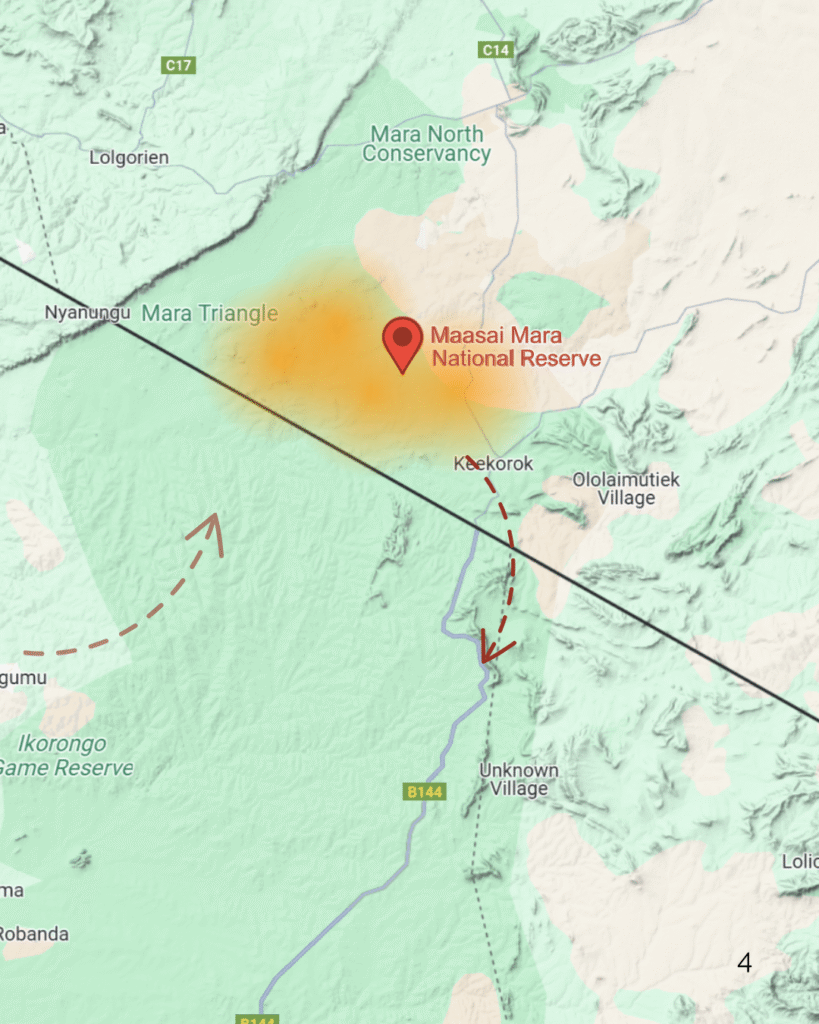
By July, the migration gains momentum as hundreds of thousands of wildebeest and zebras move north through the park’s western corridor. Their next obstacle is even more formidable — the Mara River, home to one of the most dramatic wildlife spectacles on Earth. While these crossings typically begin in July during peak safari season, their timing ultimately depends on nature.
By late July, those that successfully cross the Mara River spill into Kenya’s Masai Mara, completing one of the planet’s greatest journeys. Travelers who choose the right lodges can witness this breathtaking event right from their deck, with the Mara and Talek rivers offering an unmatched front-row view of Africa’s wild heart in motion.
Perfect for American travellers seeking a true African safari experience, this season combines thrilling wildlife encounters, exceptional photography opportunities, and luxury accommodations curated by Ameliya.
The Great Migration from August to October
The Great Migration from August to October
By August, the herds have conquered the powerful Mara River and spread across the northern Masai Mara and the upper reaches of the Serengeti. When the river runs strong, the crossings turn into a dramatic clash of survival – the thunder of hooves, swirling currents, and lurking predators create scenes both chaotic and awe-inspiring. Even in calmer years, danger never disappears. Crocodiles and big cats lie in wait, making every crossing a test of instinct and endurance. Some crossings last only minutes; others unfold for hours, with thousands of wildebeest pouring across in a breathtaking display of nature’s power.
By September and October, the intensity fades as the herds move eastward across the Mara. Yet the cycle continues – soon, the wildebeest will face the Mara River again on their journey south, following the timeless rhythm of Africa’s greatest migration.
For American travellers, this period offers some of the most rewarding safari moments of the year. With clear skies, abundant wildlife, and fewer crowds, it’s the ideal time to experience Kenya’s Masai Mara or Tanzania’s northern Serengeti on a luxury Great Migration safari curated by Ameliya.
The Great Migration in November and December
The Great Migration in November and December
Following the East African short rains in late October and early November, the wildebeest begin their southward journey from Kenya, moving into the eastern edges of the Serengeti. Passing through the Namiri Plains — renowned for exceptional cheetah sightings — they gradually spread across the region. By December, the herds can be found scattered throughout the eastern and southern Serengeti.
As the new year begins, the rains bring vibrant green grasses to the southern plains, drawing not only the wildebeest but also hundreds of thousands of zebras and other plains animals. With the landscape renewed, the migration cycle comes full circle, ushering in the calving season once more.
Wildlife to See During Great Migration Safari Africa